History | November 16, 2026

Kom Ombo and Gebel el-Silsila: The Double Temple and the Quarries

Kom Ombo is a temple with two front doors. It was built for two gods at once, a crocodile and a falcon, and each has his own entrance, his own halls and his own sanctuary. The temple stands on the east bank, directly above the water. A little further north the Nile narrows between cliffs of yellow sandstone, and the ship passes through the quarry that most of Egypt’s great temples were cut from.

ON THE STANDARD ITINERARY · ALL VOYAGES

Kom Ombo Temple

Kom Ombo Temple seen from the Nile
Kom Ombo from the river.

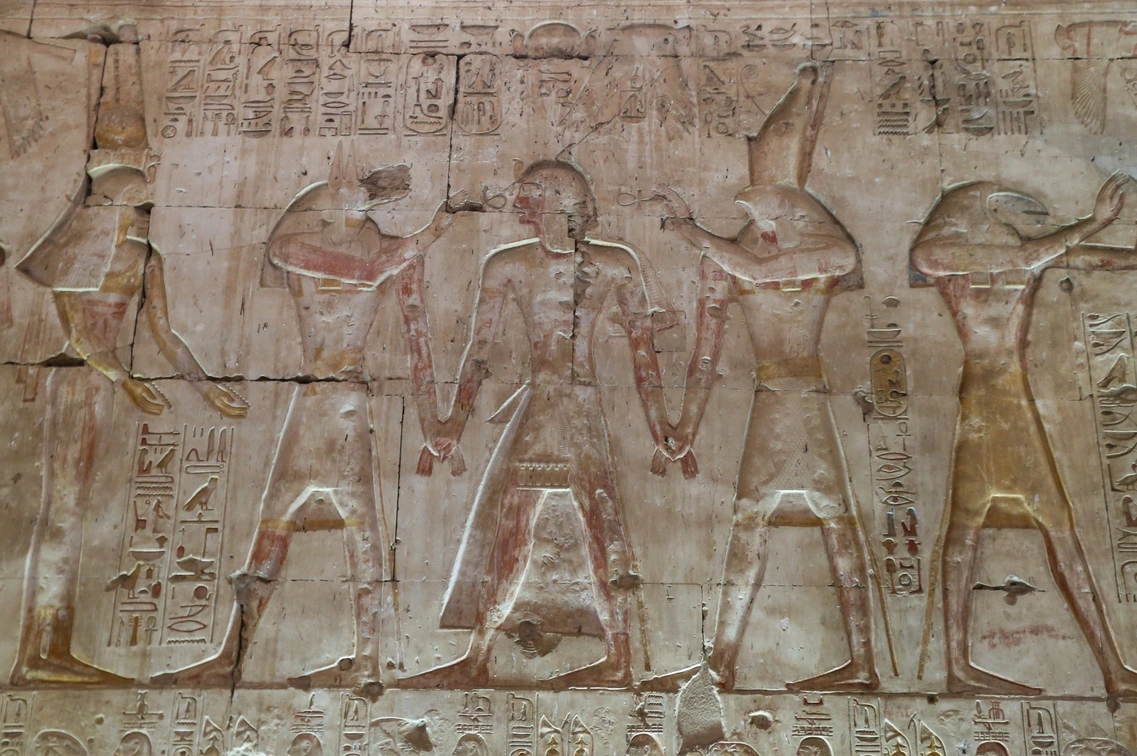
Everything in the temple comes in pairs: courts, halls and sanctuaries. The southern half belonged to Sobek, the crocodile god. The northern half belonged to Haroeris, Horus the Elder, who has the head of a falcon.

Relief of the falcon god and the crocodile god at Kom Ombo
The two gods of the temple, falcon and crocodile.

The temple you see was begun under Ptolemy VI, around 180 BC, and work on it went on for more than a century. On the inner face of the rear wall is a relief that is usually read as a set of surgical instruments.

Much of the rest was lost to the Nile, to earthquakes and to later builders who took the stone. When Amelia Edwards came in the 1870s the columns were buried almost to their capitals, and she called it “a magnificent torso”. The sand was cleared in 1893.

About three hundred mummified crocodiles have been found near the temple, and a few of them are shown in the small museum beside it.

SEEN FROM THE SHIP · ALL VOYAGES

Gebel el-Silsila

Rock-cut shrines at Gebel el-Silsila seen from the Nile
Rock-cut shrines at Gebel el-Silsila, seen from the river.

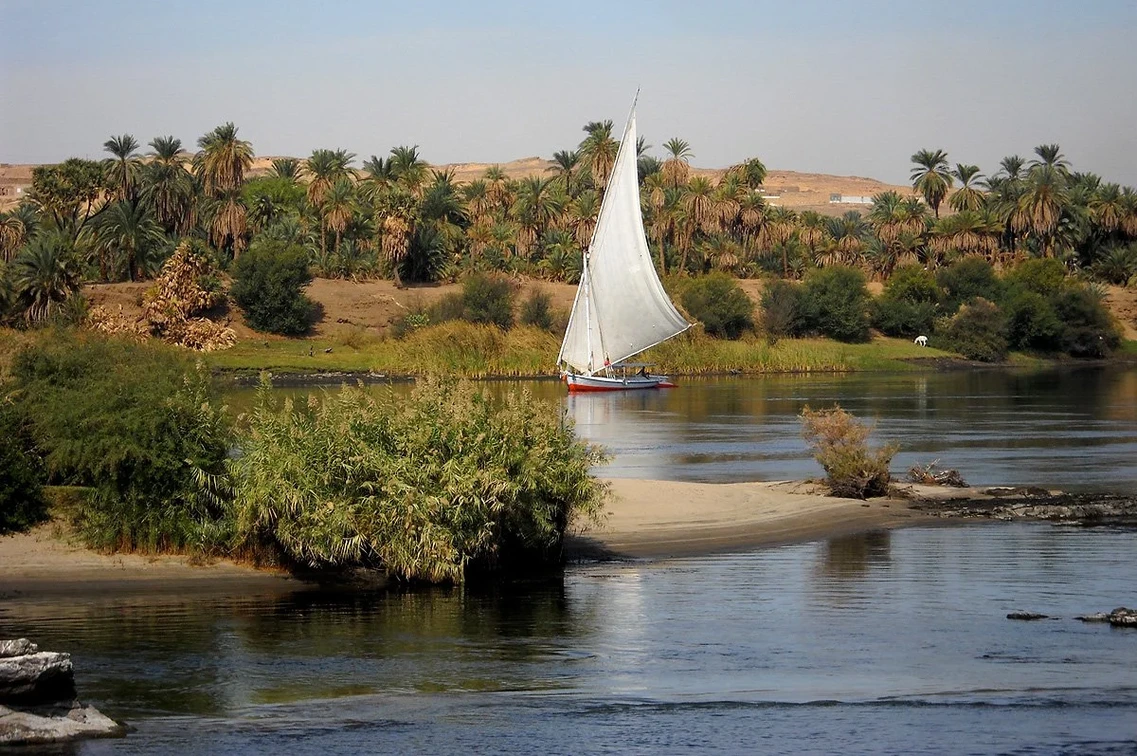
Sixty-five kilometres north of Aswan the cliffs come down to the water on both sides, and the Nile is close to the narrowest it will be anywhere along its length. The ancient Egyptians called the place Kheny, the Place of Rowing.

“At Silsilis, the yellow cliffs have been sliced as neatly as the cheeses in a cheesemonger’s window.”

AMELIA B. EDWARDS, A THOUSAND MILES UP THE NILE, 1877

Almost all the great temples of the New Kingdom, and of the Ptolemies after them, took their sandstone from here. Karnak, Luxor Temple, the Ramesseum, Medinet Habu and Kom Ombo itself are built of it. The quarries were worked on both banks from at least the Eighteenth Dynasty until Roman times.

From the deck you can see the flat faces the quarrymen left, and the small shrines that the officials in charge of the work cut into the rock at the water’s edge.
Explore Other Stories

Aswan: Philae, the High Dam and the Unfinished Obelisk

History

Aswan: Philae, the High Dam and the Unfinished Obelisk

Aswan is where the Nile changes. North of here the river runs wide and slow between fields. At Aswan it breaks around islands of granite, the First Cataract, which for most of ancient history marked the southern frontier of Egypt. Every Aeterna voyage calls here and stays the night.
Edfu and Esna: The Temple of Horus and the Lock

History

Edfu and Esna: The Temple of Horus and the Lock

For centuries the houses of Edfu stood on top of a temple. Sand and river silt had buried it twelve metres deep, until only the tops of its gateway towers showed above the ground. When Auguste Mariette began to dig it out in 1860, the building underneath turned out to be almost whole. Further down the river, at Esna, the Nile is held back by a barrage and the ship is taken through a lock.
Luxor, the East Bank: Karnak, Luxor Temple and the Museum

History

Luxor, the East Bank: Karnak, Luxor Temple and the Museum

Karnak was two thousand years in the building. About thirty kings added to it, one after another, and a little under three kilometres to the south Luxor Temple has been in use, in one form or another, for thirty-four centuries. This is the east bank of ancient Thebes, the side of the city and its gods. The tombs lie across the river.
Luxor, the West Bank: The Valley of the Kings, Hatshepsut and Medinet Habu

History

Luxor, the West Bank: The Valley of the Kings, Hatshepsut and Medinet Habu

The west bank at Luxor is where Thebes buried its dead. The kings were laid in a dry valley behind the hills, out of sight of the river, and the temples built for their memory stand in a line where the fields meet the desert. Every Aeterna voyage crosses to this side.
Dendera and Abydos: Two Temples North of Luxor

History

Dendera and Abydos: Two Temples North of Luxor

The ceiling of the temple at Dendera is still blue. It was painted some two thousand years ago and has only recently been cleaned. Further north, at Abydos, the sacred city of Osiris, a king had the names of the kings before him carved along one wall, and behind his temple lies the sunken hall that gave the Osireion lounge on board Aeterna its name. Both temples lie north of Luxor, beyond the ship’s usual route.
The Colour of a Nubian House

Culture

The Colour of a Nubian House

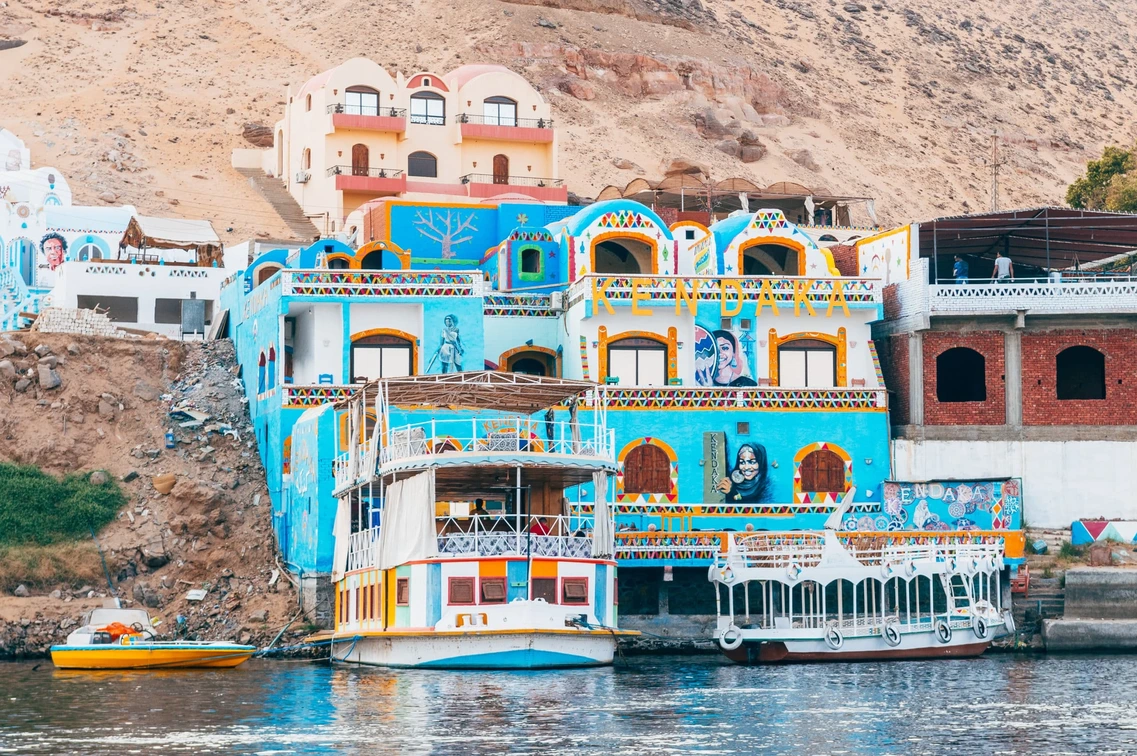
I want to tell you about a doorway. It is in Gharb Soheil, on the west bank at Aswan, about halfway up the sandy lane that climbs from the water. The wall around it is whitewashed. The doorframe is painted a blue so saturated it looks wet, and above the door there are three plates set into the plaster, and a row of hand-painted triangles in ochre and green running along the top of the wall. A woman I have known for years lives behind it. Her mother painted that frame. Her daughter repaints it now, the same colour, because that is the family's blue. I have taken hundreds of people past that door and I have never once gotten there without somebody stopping.
What I Watch For From the Deck

Nature

What I Watch For From the Deck

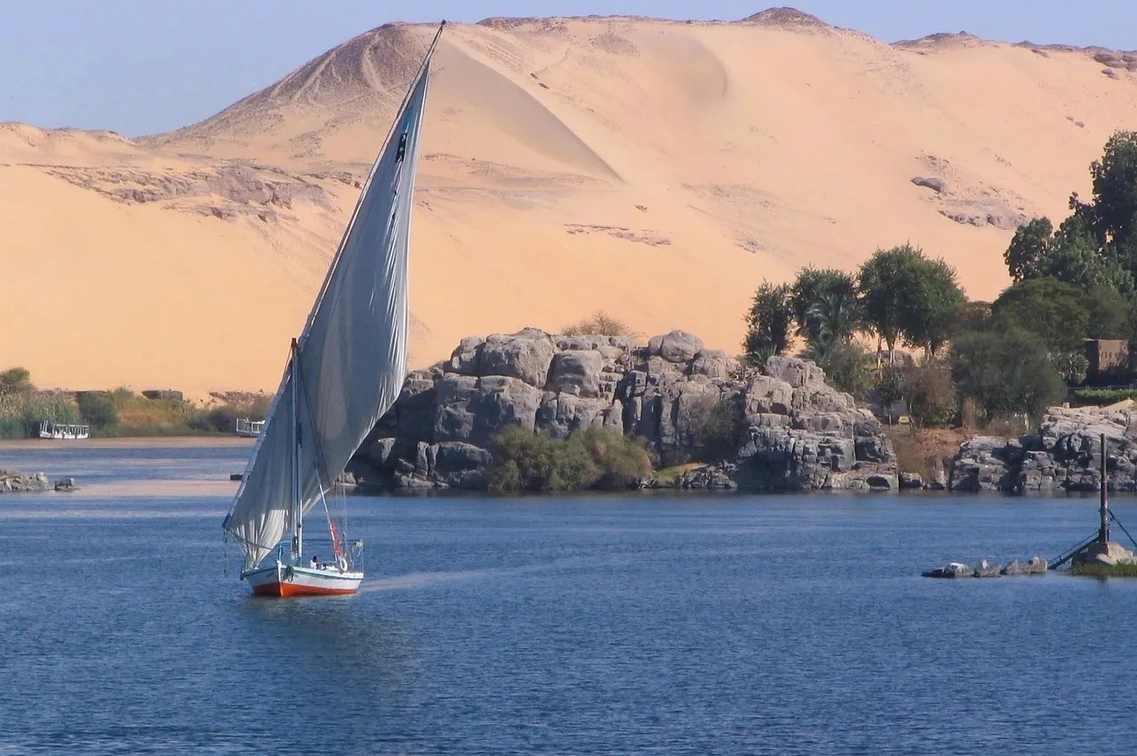
Most guests come up to the sundeck on the first afternoon with a camera pointed at the temples on the bank. I understand it. But by the second day, almost everyone has turned the camera the other way, at the water, and started asking me what the small black and white bird is. It is a pied kingfisher, and once you notice one you will not stop noticing them.
The Hands That Are Still Working

Culture

The Hands That Are Still Working

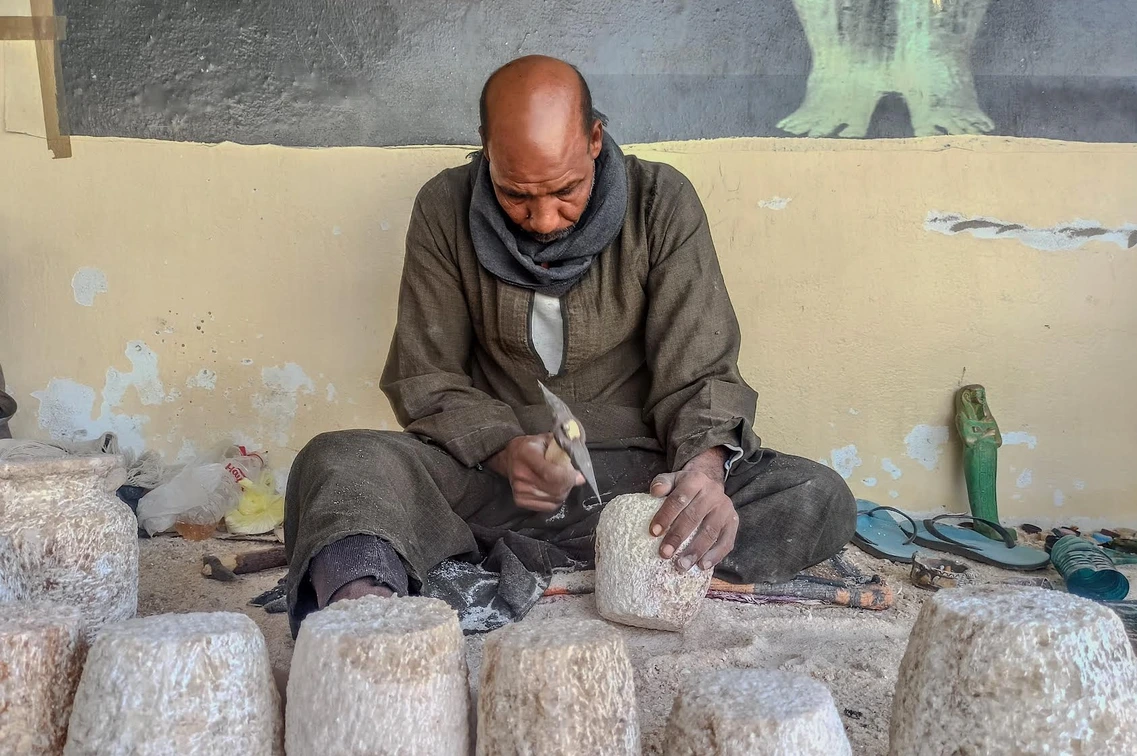
There is a moment in almost every alabaster workshop on the Luxor west bank when the man carving stops, picks up the piece he has been shaping, and holds it in front of a bare bulb. The stone goes translucent. You can see his fingers through it, dark, moving on the far side. It gets the same reaction every single time, and he knows it does, and he does it anyway with the timing of somebody who has done it ten thousand times and still likes the trick.

Get In Touch With A Personal Cruise Consultant