History | November 12, 2026

Dendera and Abydos: Two Temples North of Luxor

The ceiling of the temple at Dendera is still blue. It was painted some two thousand years ago and has only recently been cleaned. Further north, at Abydos, the sacred city of Osiris, a king had the names of the kings before him carved along one wall, and behind his temple lies the sunken hall that gave the Osireion lounge on board Aeterna its name. Both temples lie north of Luxor, beyond the ship’s usual route.

BY PRIVATE ARRANGEMENT

The Temple of Hathor at Dendera

Hathor-headed columns and painted ceiling in the temple of Dendera
Hathor-headed columns and the painted ceiling at Dendera.

The temple of Hathor at Dendera is one of the best preserved in Egypt. The building you enter was begun in 54 BC, under Ptolemy XII, and its great columned hall was added under the Roman emperor Tiberius. Each column is topped with the face of the goddess.

Look up. The ceiling is painted with scenes of the sky, and since its cleaning the colours are clear again. A circular zodiac was cut out of the ceiling of a roof chapel in the 1820s and is now in the Louvre. A copy fills its place.

On the outside of the rear wall Cleopatra VII is shown with Caesarion, her son by Julius Caesar.

The façade of the temple of Hathor at Dendera
The façade of the temple of Hathor.

BY PRIVATE ARRANGEMENT

The Temple of Seti I at Abydos

The entrance to the temple of Seti I at Abydos
The temple of Seti I at Abydos.

Abydos was the centre of the cult of Osiris, and for centuries Egyptians wanted to be buried or remembered here. The temple that stands today was built by Seti I and finished by his son Ramesses II. It has seven chapels side by side, for Osiris, Isis, Horus, Amun-Re, Re-Horakhty, Ptah-Sokar and the king himself.

Painted relief in the temple of Seti I at Abydos
A relief in the temple of Seti I.

On one wall is a list of the kings who came before him, name after name in cartouches, from Menes down to Seti’s own father. It is known as the Abydos King List.

“…the Temple of Seti, as regards its sculptured decorations, is one of the most beautiful of Egyptian ruins; and as regards its plan, is one of the most singular.”

AMELIA B. EDWARDS, A THOUSAND MILES UP THE NILE, 1877

BY PRIVATE ARRANGEMENT

The Osireion

The Osireion behind the temple of Seti I at Abydos
The Osireion, behind the temple of Seti I.

Behind the temple, and lower than it, lies the Osireion. It is thought to be a cenotaph, a symbolic tomb, built for Seti as Osiris. Its hall of granite pillars stands on an island of stone, surrounded by a channel of water that rises from below ground. It was found in 1902 and 1903 by Flinders Petrie and Margaret Murray.
Explore Other Stories

Aswan: Philae, the High Dam and the Unfinished Obelisk

History

Aswan: Philae, the High Dam and the Unfinished Obelisk

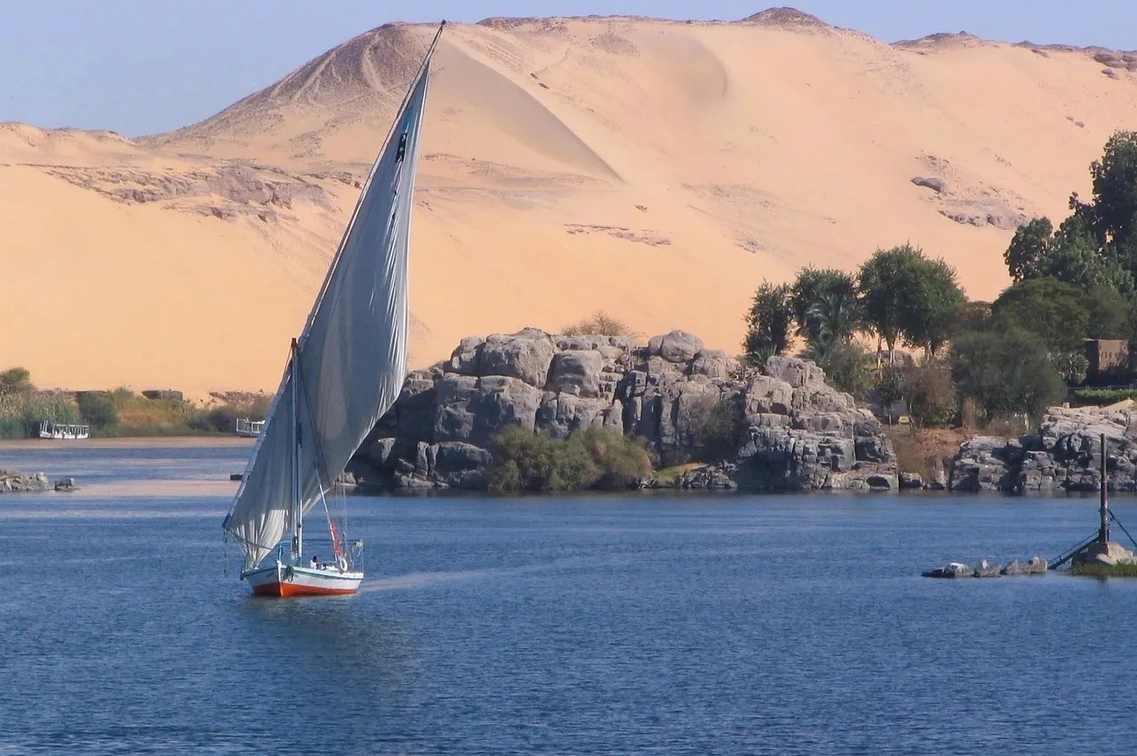
Aswan is where the Nile changes. North of here the river runs wide and slow between fields. At Aswan it breaks around islands of granite, the First Cataract, which for most of ancient history marked the southern frontier of Egypt. Every Aeterna voyage calls here and stays the night.
Kom Ombo and Gebel el-Silsila: The Double Temple and the Quarries

History

Kom Ombo and Gebel el-Silsila: The Double Temple and the Quarries

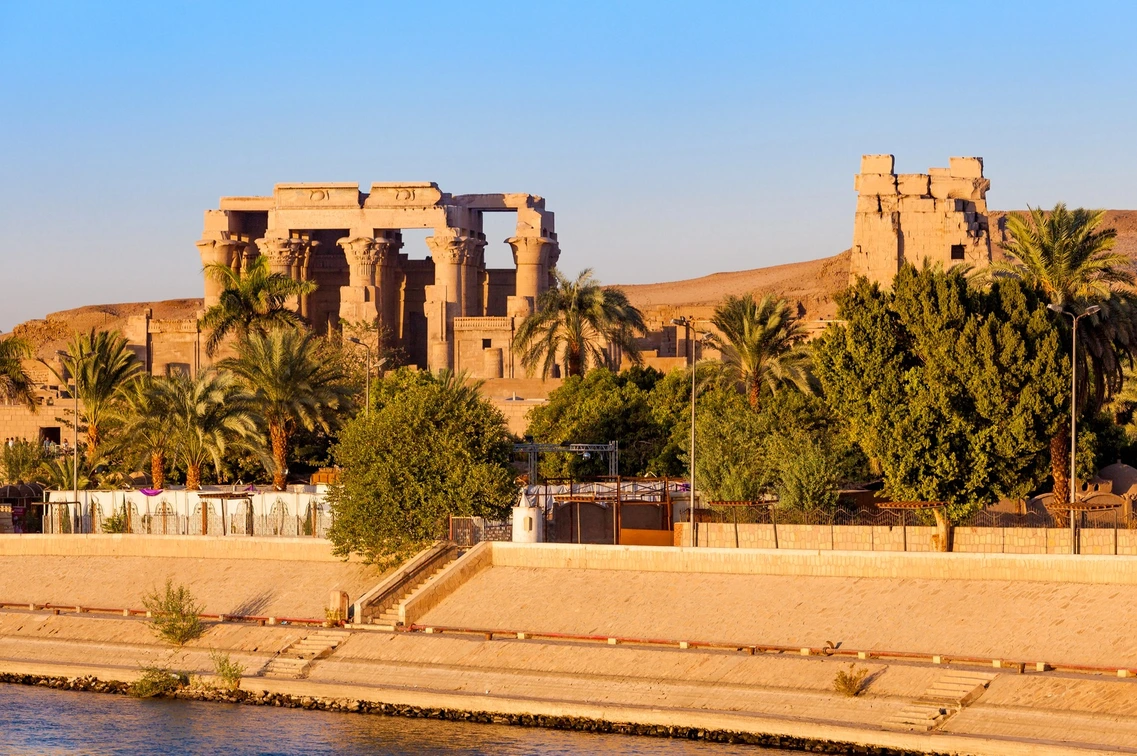
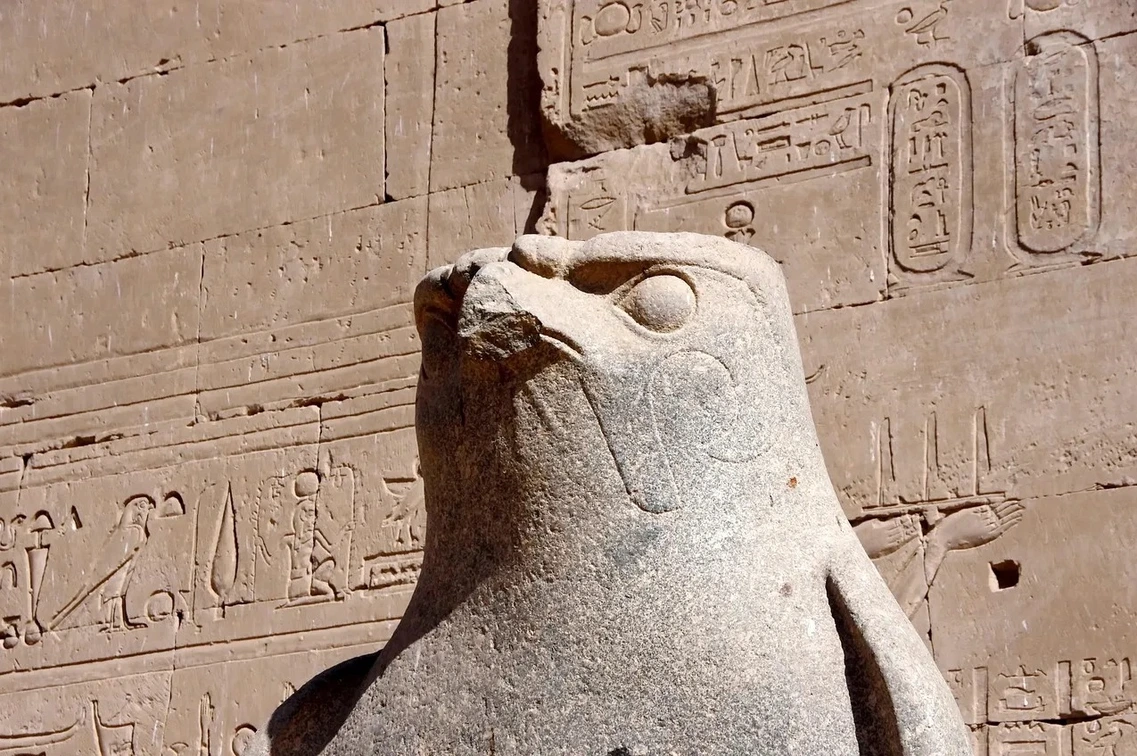
Kom Ombo is a temple with two front doors. It was built for two gods at once, a crocodile and a falcon, and each has his own entrance, his own halls and his own sanctuary. The temple stands on the east bank, directly above the water. A little further north the Nile narrows between cliffs of yellow sandstone, and the ship passes through the quarry that most of Egypt’s great temples were cut from.
Edfu and Esna: The Temple of Horus and the Lock

History

Edfu and Esna: The Temple of Horus and the Lock

For centuries the houses of Edfu stood on top of a temple. Sand and river silt had buried it twelve metres deep, until only the tops of its gateway towers showed above the ground. When Auguste Mariette began to dig it out in 1860, the building underneath turned out to be almost whole. Further down the river, at Esna, the Nile is held back by a barrage and the ship is taken through a lock.
Luxor, the East Bank: Karnak, Luxor Temple and the Museum

History

Luxor, the East Bank: Karnak, Luxor Temple and the Museum

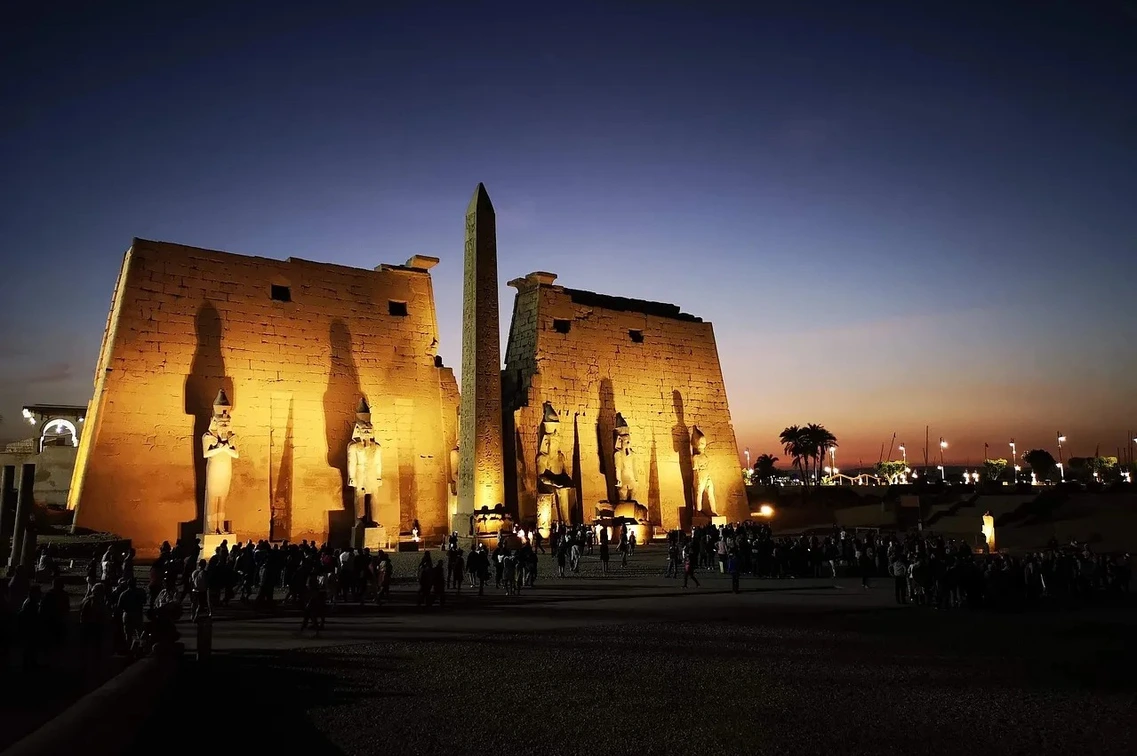
Karnak was two thousand years in the building. About thirty kings added to it, one after another, and a little under three kilometres to the south Luxor Temple has been in use, in one form or another, for thirty-four centuries. This is the east bank of ancient Thebes, the side of the city and its gods. The tombs lie across the river.
Luxor, the West Bank: The Valley of the Kings, Hatshepsut and Medinet Habu

History

Luxor, the West Bank: The Valley of the Kings, Hatshepsut and Medinet Habu

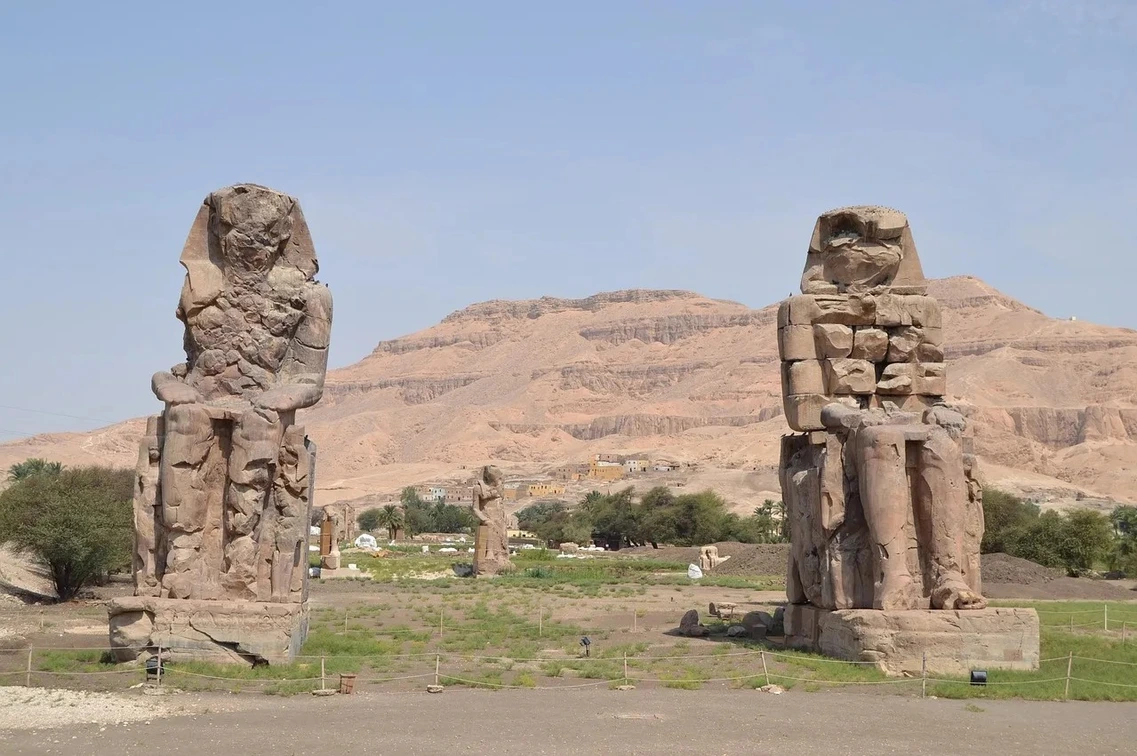
The west bank at Luxor is where Thebes buried its dead. The kings were laid in a dry valley behind the hills, out of sight of the river, and the temples built for their memory stand in a line where the fields meet the desert. Every Aeterna voyage crosses to this side.
The Colour of a Nubian House

Culture

The Colour of a Nubian House

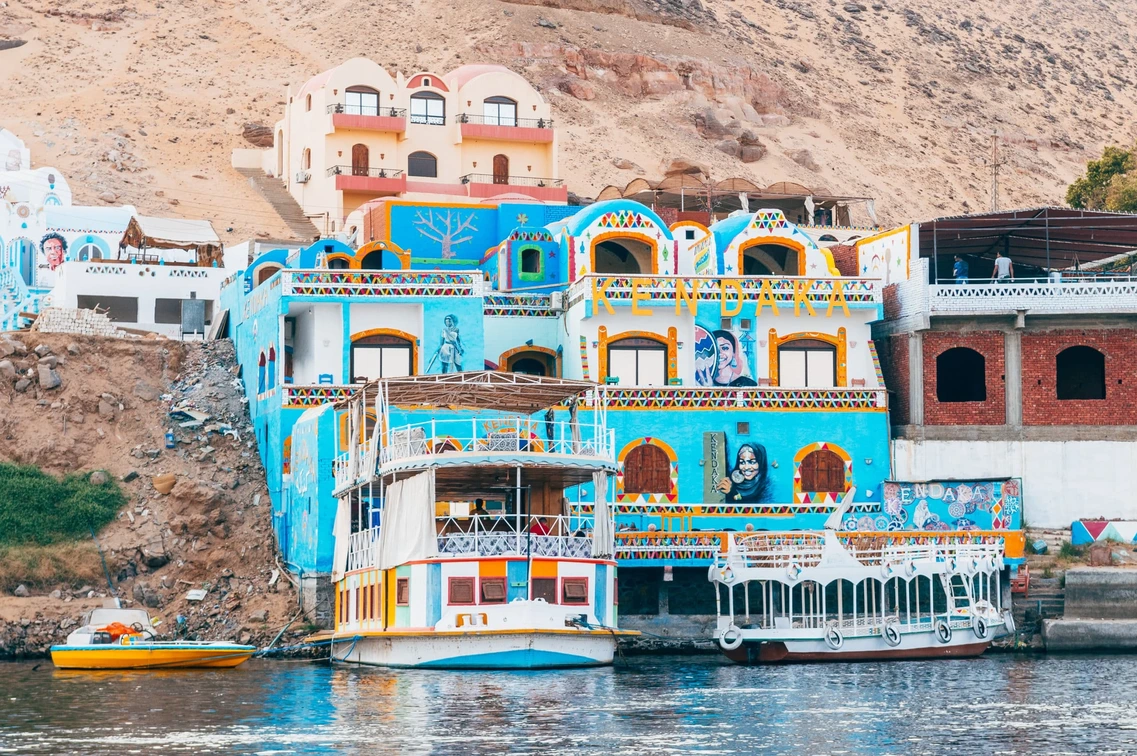
I want to tell you about a doorway. It is in Gharb Soheil, on the west bank at Aswan, about halfway up the sandy lane that climbs from the water. The wall around it is whitewashed. The doorframe is painted a blue so saturated it looks wet, and above the door there are three plates set into the plaster, and a row of hand-painted triangles in ochre and green running along the top of the wall. A woman I have known for years lives behind it. Her mother painted that frame. Her daughter repaints it now, the same colour, because that is the family's blue. I have taken hundreds of people past that door and I have never once gotten there without somebody stopping.
What I Watch For From the Deck

Nature

What I Watch For From the Deck

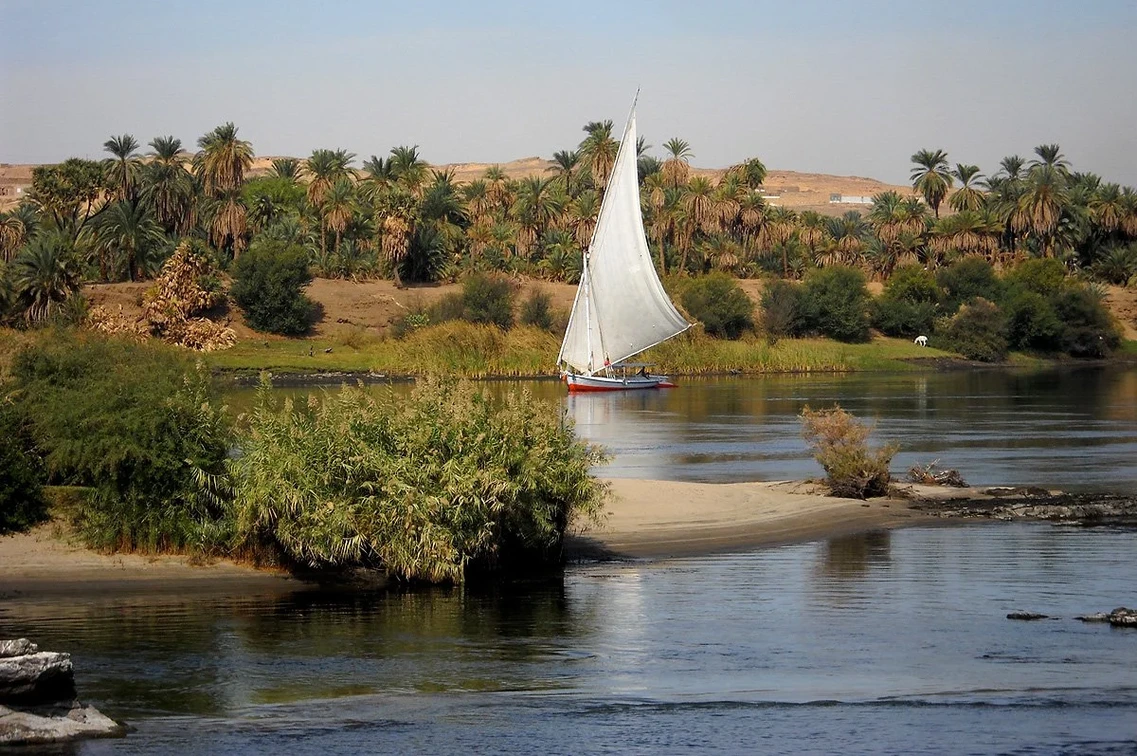
Most guests come up to the sundeck on the first afternoon with a camera pointed at the temples on the bank. I understand it. But by the second day, almost everyone has turned the camera the other way, at the water, and started asking me what the small black and white bird is. It is a pied kingfisher, and once you notice one you will not stop noticing them.
The Hands That Are Still Working

Culture

The Hands That Are Still Working

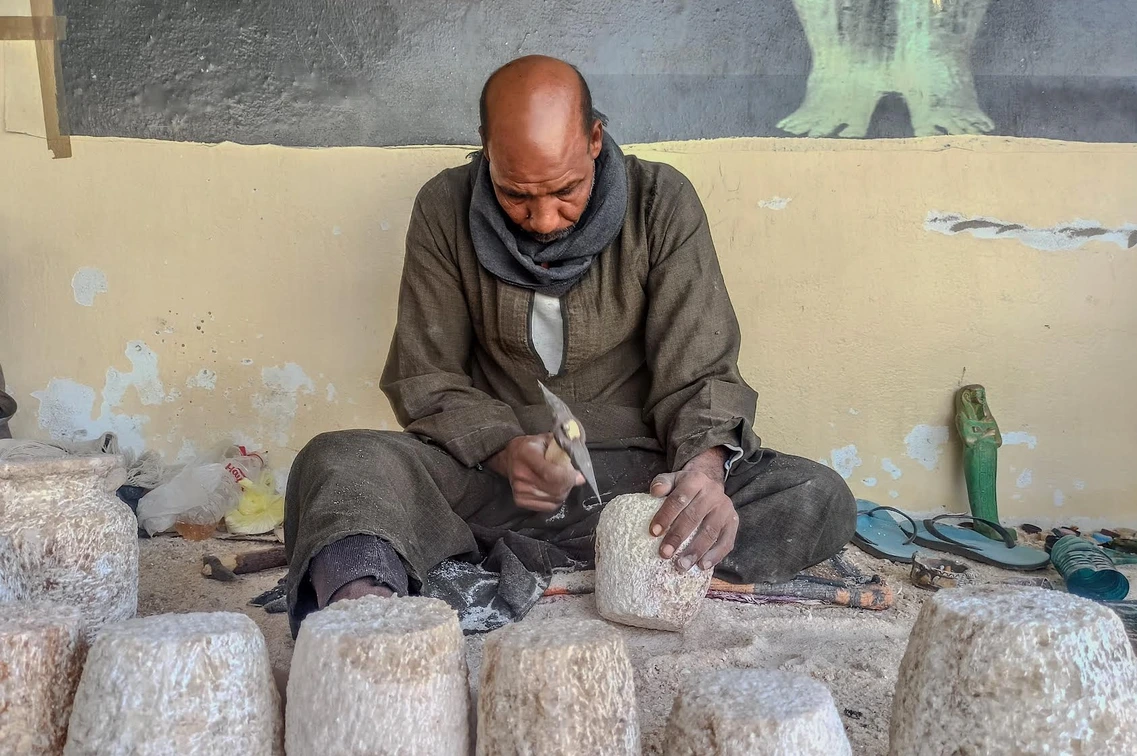
There is a moment in almost every alabaster workshop on the Luxor west bank when the man carving stops, picks up the piece he has been shaping, and holds it in front of a bare bulb. The stone goes translucent. You can see his fingers through it, dark, moving on the far side. It gets the same reaction every single time, and he knows it does, and he does it anyway with the timing of somebody who has done it ten thousand times and still likes the trick.

Get In Touch With A Personal Cruise Consultant